





 SALES
SALES






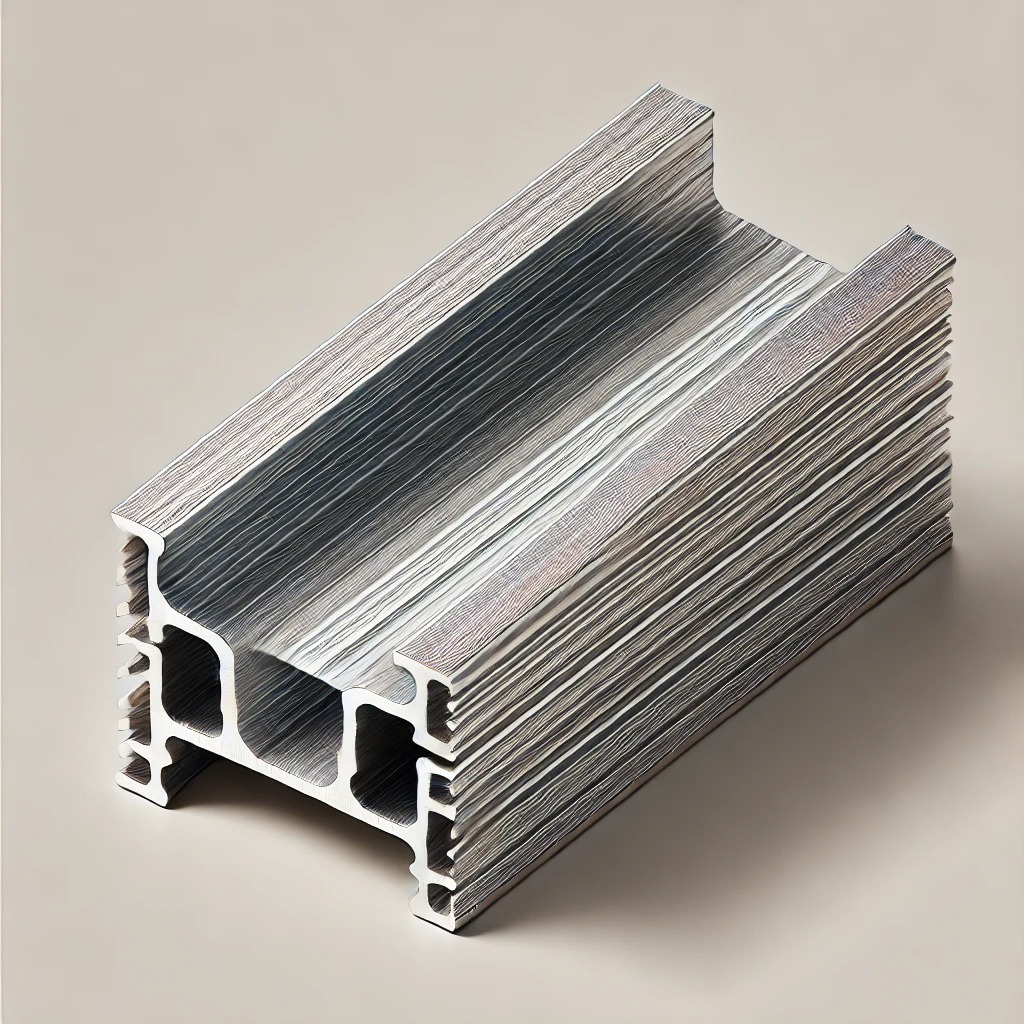
I-beams are a common and widely used type of structural steel beam. They play a critical role in construction and engineering, providing support and load-bearing capacity across various applications. Typically, I-beams are made from carbon steel, although depending on specific use requirements, other materials such as alloy steel or aluminum may be used. The proper selection of size and type of I-beam is determined by engineering calculations and project-specific factors including load requirements, span lengths, and environmental conditions.
Key Features:
- I-shaped cross-section: I-beams have an “I” shape characterized by a vertical web connected to two horizontal flanges. This design provides a high strength-to-weight ratio, allowing efficient load-bearing.
- Versatile and efficient: I-beams can carry both axial (vertical) and bending (horizontal) loads, making them suitable for a wide range of applications.
- Various sizes: Available in multiple sizes and profiles to meet specific engineering needs.
- Standardized profiles: I-beams often conform to established standards, facilitating easier use by engineers and builders.
Applications:
- Building construction: Widely used as columns, beams, and frame supports, essential for the structural integrity of buildings, bridges, and other infrastructure.
- Bridges: Used in bridge construction to support roadways and pedestrian pathways and enable spanning.
- Industrial facilities: Used in warehouses and factories to support heavy equipment, cranes, and storage systems.
- Residential construction: Used in load-bearing walls, floor joists, and roof trusses.
- Infrastructure projects: Utilized in tunnels, railway systems, and airports to support large areas and structures.
- Shipbuilding: Provide structural support and distribute loads across ship hulls.
- Material handling: Used in overhead cranes, conveyors, and equipment moving heavy loads.
- Aerospace industry: Used in aircraft construction, particularly in fuselage, wing, and landing gear assemblies.
- Automotive manufacturing: Used for vehicle frames and chassis components.
- Mechanical engineering and structural design: Employed in various industries where load-bearing capacity is critical for stability and safety.
IPN and IPE Series — Meaning and Differences:
|
Series |
Full Name |
Standard |
Characteristics |
|
IPN |
I Profile Normalized |
DIN 1025-1 / GOST 8239 |
Sloped flanges; traditionally used in older projects, smaller cross-sectional area. |
|
IPE |
I Profile European |
EN 10034 / DIN 1025-5 |
Parallel flanges; modern profile with better welding capabilities. |
- IPN is a traditional type of I-beam with sloped flanges, commonly used in Soviet-era and older Russian projects.
- IPE is a European type of profile with parallel flanges, offering better connectivity and load-bearing capacity, standardized under EN 10034, and is the main choice in modern European construction.
Standards and Regulations:
|
Standard |
Name |
|
EN 10034 |
Steel I and H beam geometric tolerances |
|
DIN 1025 |
German standard for various I-beam types (IPN, IPE, HEA, HEB, HEM) |
|
GOST 8239 |
Soviet / Russian standard for IPN series beam production |