



 SALES
SALES




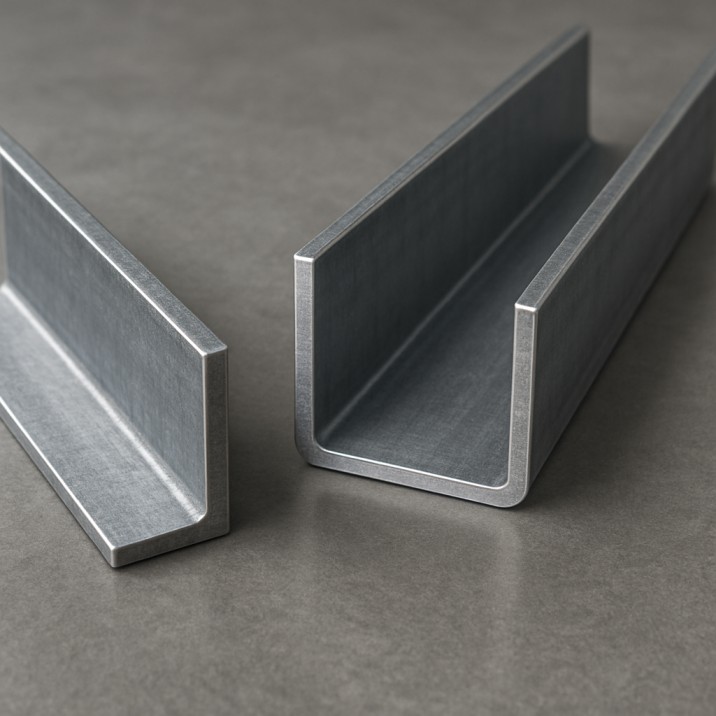
Bent steel U-profiles and L-profiles refer to steel sections formed by bending or shaping cold-rolled steel sheets or strips. These channels are commonly used in construction and structures. Let's explore the characteristics and common applications of both U-shaped and L-shaped bent profiles:
- Bent U-Profile:
- Shape: U-shaped channels have a U-shaped cross-section with two parallel flanges and a connecting web.
- Manufacturing: Cold-formed U-shaped channels are made by bending or shaping steel sheets or strips into the desired U-shape profile.
- Material Variety: They are typically made from various materials, including carbon steel, stainless steel, and galvanized steel.
Applications:
-
- Structural framing in buildings and construction.
- Support elements in framing systems.
- Industrial and commercial shelving.
- Vehicle construction.
- General structural applications where a U-shaped profile provides strength and support.
- Bent L-Profile:
- Shape: L-shaped channels have an L-shaped cross-section with one leg shorter than the other, forming a right angle.
- Manufacturing: Cold-formed L-shaped channels are produced by bending or shaping steel sheets or strips into the desired L-shape profile.
- Material Variety: Like U-channels, L-channels are made from various materials, including carbon steel, stainless steel, and galvanized steel.
Applications:
-
- Building structural framework and support.
- Edge protection and framework for drywall or other types of cladding.
- Support brackets for various applications.
- Door and window frame construction.
- General structural and framing purposes where an L-shaped profile offers versatility.
Key Considerations:
- Material Selection: The choice of material (e.g., carbon steel, stainless steel) depends on factors such as load-bearing requirements, environmental conditions, and corrosion resistance.
- Size: Both bent U-profiles and L-profiles come in various sizes, providing flexibility in meeting specific project requirements.
- Strength and Stability: Bent steel profiles offer good strength and stability, making them suitable for various structural applications.
- Installation: Bent steel profiles are typically easy to handle and install, contributing to their popularity in construction projects.
In summary, both U-shaped and L-shaped bent profiles provide versatile solutions for structural applications in construction and various industries. The choice between a U-shaped bent profile and an L-shaped bent profile depends on specific project requirements, including the desired cross-sectional shape and sizes.