




 SALES
SALES






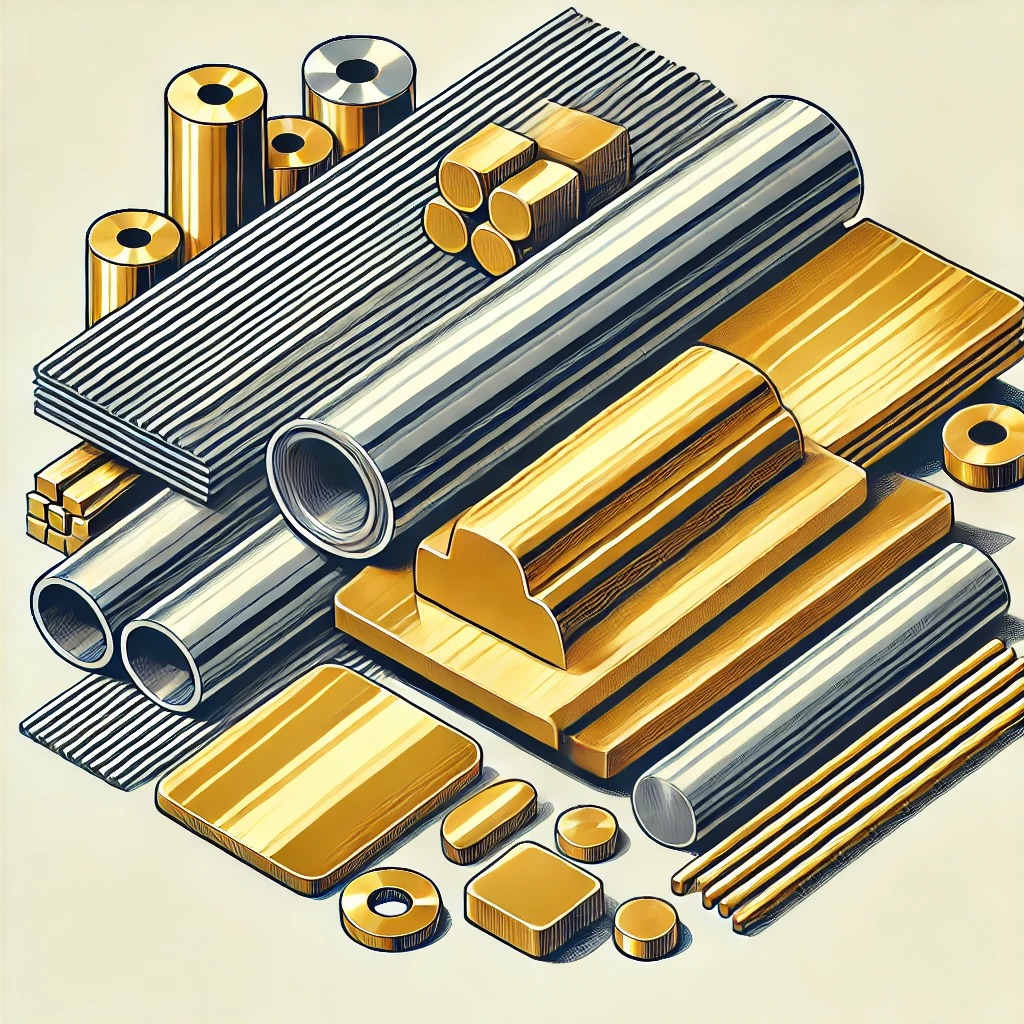
Brass is a metallic alloy primarily composed of copper and zinc. The ratio of copper to zinc can vary, resulting in different types of brass with various properties.
Characteristics:
• Brass is known for its yellow or reddish-golden color, depending on the copper content.
• It has good corrosion resistance.
• Brass is malleable and has a relatively low melting point, making it easy to work with.
• The addition of other elements, such as lead, can improve machinability.
Applications:
Brass is widely used in various applications, including musical instruments, plumbing fittings, electrical connectors, decorative items, and coinage.
It is often chosen for its corrosion resistance, malleability, and visual appeal.
Grades:
Depending on composition and use, brass is classified into several grades. The most common brass grades include:
• CuZn37 (CW508L) – general-purpose brass with good cold formability.
• CuZn39Pb3 (CW614N) – leaded brass, excellent for machining, commonly used for mechanical parts.
• CuZn36Pb3 (CW603N) – similar to CW614N, but with slightly lower zinc content.
• CuZn40 (CW509L) – suitable for hot forming, offers higher strength.
• CuZn20 (CW503L) – higher copper content, good formability, and good electrical properties.
These grades comply with European standards (EN) and are selected based on required mechanical strength, processing method, and final application.